
Treating Shyness in Children at School: Practical Steps to Support Your Child

How do you treat shyness in children at school?
Your child sits at the back of the classroom, eyes watching the other children as they laugh and chat. They try to raise their hand to answer the teacher's question, but their voice won't cooperate. They sink down in their seat, wishing they could just be invisible!
Then they come home, and you notice how quiet they are. You ask about their day at school, and they reply with a short answer. They don't mention any friends by name, they don't tell stories about the school day, just "it was a normal day." But you sense there is more to it than that.
Shyness at school is a barrier that keeps your child from enjoying their school experience. So how can you help them move past it, and give them the confidence to feel more comfortable and happy among their classmates? You will find the answer here.
Treating Shyness in Children at School

Shyness is not a flaw, but it can become a barrier if a child never learns to overcome it. This is where your role comes in, because you are the only one who can break down this wall. Among the most important steps for addressing it:
Building your child's self-confidence
It all starts at home, with the way your child sees themselves before the world sees them. Do they feel capable of facing challenges? Or does their inner voice whisper that they are less than others? Every small success adds a building block to their confidence, and this is where you come in, supporting them with practical steps.
One of the best ways to build their confidence is to give them the chance to discover new skills, especially ones that give them a sense of accomplishment, such as coding.
Learning to code gives a child problem-solving skills and logical thinking, which makes them better able to handle social situations with confidence.
When they see that they have completed a project on their own, their sense of capability and accomplishment grows, and that carries over into how they engage at school.
Every word they hear from you shapes the image they have of themselves, so be their source of support. Don't just say "well done," make your praise specific: "You fixed that mistake all by yourself! You're thinking the right way." In this way, you help them build an inner certainty that they are capable of succeeding, free from fear or hesitation.
So building self-confidence plays an important role in treating shyness in children at school.
Practicing social skills with them
Shyness is sometimes the result of not knowing "how to act" in a particular social situation. Your child may want to play with their classmates but not know how to ask, or may want to answer the teacher's question but be afraid of saying something wrong. This is where hands-on practice comes in, making them more prepared to face these situations.
A study published in the Journal of Childhood indicates that training children in social skills reduces their levels of shyness, helping them interact more comfortably and confidently in the school environment.
So you can start by role-playing with them at home. Sit with them and imagine different school situations, such as asking a classmate to play or responding to the teacher's question. Let them try more than one approach, and teach them how to choose their words with confidence. This gives them the sense that they have a plan ready, which reduces their anxiety in the real moment.
Preparing them for school situations in advance
The unknown is a shy child's greatest fear. When they don't know what awaits them, they feel anxious, and this can make them withdraw even more in social situations. But when they have a clear picture of the school and what will happen there, everything becomes easier.
Before the school year begins, take them on a tour of the school, and let them see their classroom, the playground, the bathrooms, and all the places they will visit every day.
Talk to them about the school routine, and explain how class will begin and how they can interact with teachers and classmates. When they know in advance what will happen, they will feel more at ease when they face it.
Partnering with teachers
Your child won't spend their whole day with you, and this is where the school comes in to support and encourage them. Don't hesitate to reach out to their teacher and let her know that your child is shy, because a good teacher can help in a gentle way.
It's a good idea to ask her to direct easy questions to them at first, and to give them a chance to answer without pressure. A supportive teacher can be a turning point in a child's life at school.
At home, make talking about school part of your day together. Ask about what happened, but don't let your questions feel like an interrogation. Instead of the usual "How was your day?", try asking "What did you enjoy most today?" or "Did anything funny happen in class?" Open-ended questions encourage them to talk without fear.
Creating a safe environment at home
Treating shyness in children at school starts right here, in a safe environment that gives them the confidence to be themselves without fear or hesitation.
Home is where a child's personality is shaped, so it's important that they feel safe and accepted there without conditions.
Don't describe them as shy in front of others, because children believe the labels they hear about themselves. If they constantly hear from you that they are shy, they will feel it is part of their identity, which only makes things worse.
When they talk to you, listen attentively. Don't interrupt or rush them. Give them time to express their thoughts, as this strengthens their self-confidence and encourages them to speak without fear. Children who feel their voices are heard at home are bolder about expressing themselves outside it.
When do you need to consult a specialist to treat shyness in children at school?
Most children go through a phase of shyness, but when does it become a problem that needs specialized intervention?
If you notice that their shyness completely prevents them from interacting with others, or that they cry or feel intense anxiety in social situations, there may be a deeper cause that needs to be addressed.
Sometimes severe shyness is linked to anxiety disorders or past experiences that have affected the child. In this case, consulting a psychologist can help you understand the problem more deeply and put together a plan to help them.
Shyness is not a defect, but it can become a constraint if a child doesn't find the right support. Your role is to help them discover their inner strength, so that one day they can stand in the middle of the classroom and raise their hand with confidence, without feeling that the whole world is watching them.
The impact of shyness on a child at school
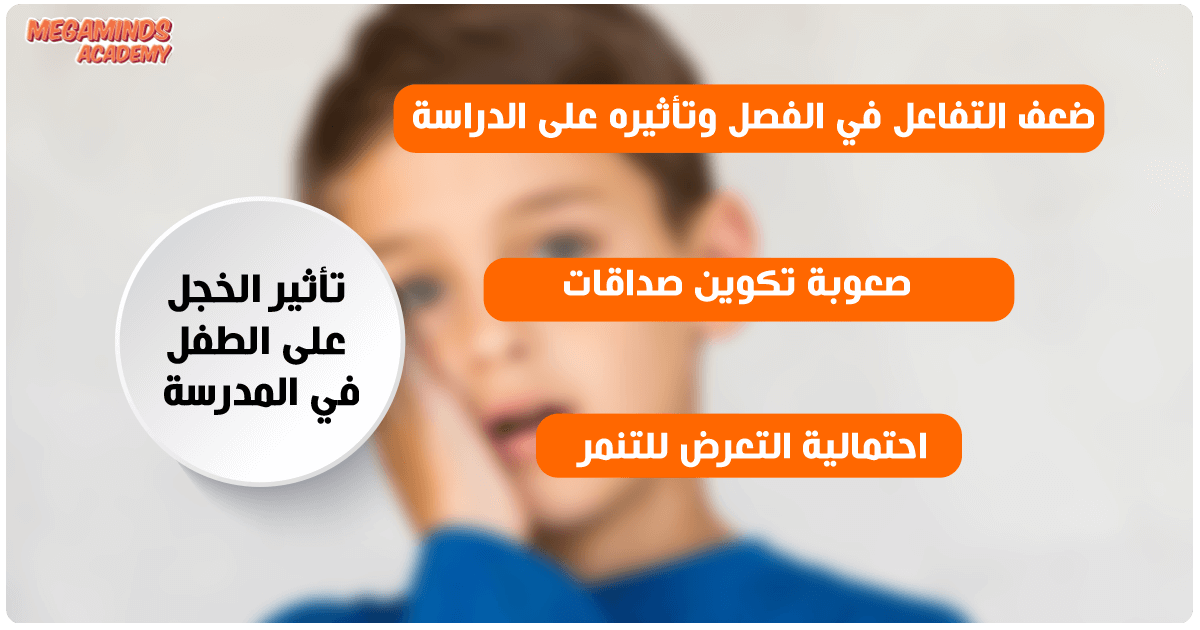
Now that you know how to treat shyness in children at school, let us tell you that the impact of shyness at school is not limited to moments of silence in the classroom. It extends to shape their relationships, their self-confidence, and even how they see the world around them. Among its most significant effects:
Weak classroom engagement and its effect on learning
Learning at school does not depend only on what is written in books, but on interacting with teachers and classmates. A child who is too shy to speak or ask questions may miss many opportunities to understand and participate. And the teacher may not notice that they didn't grasp the lesson if they don't ask for clarification, which makes them more likely to fall behind academically.
A study published in the Journal of Social and Educational Sciences indicates that severe shyness in children can negatively affect their school adjustment, leading to difficulties in interacting with teachers and classmates, which in turn is reflected in their academic level.
Children who avoid speaking in class find it hard to ask their questions, which reduces their chances of understanding the material and affects their achievement over time.
Difficulty making friends
Shy children often find it hard to start conversations or join groups, which leaves them isolated even though it isn't their choice.
Your child may want to play with their classmates, but they don't know how to approach them. They fear being ignored or rejected, so they pull back step by step, until they end up alone without anyone noticing.
Friendship at this stage is an essential part of a child's social development, because playing with friends teaches them cooperation, problem-solving, and sharing feelings.
And when a child doesn't find anyone to share these experiences with, it can affect their self-confidence and make them more withdrawn over time.
The risk of being bullied
A shy child is often an easy target for bullies, because their inability to respond or defend themselves can make them more vulnerable to harassment, especially in a school environment that does not monitor such behavior strictly.
A bully looks for someone who won't fight back, someone too shy to complain, someone who prefers silence to confrontation, and this puts the shy child in the danger zone.
Fear of bullying can increase a child's isolation and make them even more reluctant to participate, or even to go to school.
Some children don't tell their parents what is happening, either because they feel embarrassed or because they believe no one can help them. That is why it's important to stay alert, watch your child's behavior, and ask about their day in a way that makes them feel safe enough to talk without fear or embarrassment.
Conclusion
Shyness can become an obstacle for a child if it stops them from enjoying their school experience and interacting with others. So treating shyness in children at school begins with your role as a mother in supporting them through practical steps that build their self-confidence, whether by encouraging them to engage socially or by teaching them new skills such as coding, which gives them a sense of accomplishment and a greater ability to solve problems.
Change won't happen overnight, but it is a process that takes patience and persistence.
Celebrate every bit of progress they make, and be the safe haven where they find support and encouragement. And if you feel that their shyness is significantly affecting their life despite all your efforts, don't hesitate to consult a specialist. Most importantly, let your child realize that they don't need to hide, but are capable of facing the world with confidence.