
The Easiest Programming Languages for Kids to Build Their Digital Skills

In the past, it was simple: a sheet of paper, a pencil, and a child writing their first letters with an endearing stammer, drawing the sun as a yellow circle and the grass as wavy green lines.
Then everything changed. The world became screens, and dreams began to be built in a language the eyes cannot see, yet one that moves worlds and shapes destinies. Today, it is no longer enough for a child to know how to write their name; they now need to understand how to tell a computer what they want, how to design moving elements and responsive games, how to write code the way our ancestors once wrote letters with ink and a quill.
But there is no need to worry, because there are programming languages suited to young learners; languages that don't require Einstein's genius or Newton's patience, since they rely on fun games and interactive adventures that let a child learn without even realizing it.
In this article, we walk through the easiest programming languages for kids, the ones that turn the computer screen into a window of fun and a gateway to creativity and imagination.
The Easiest Programming Languages for Kids
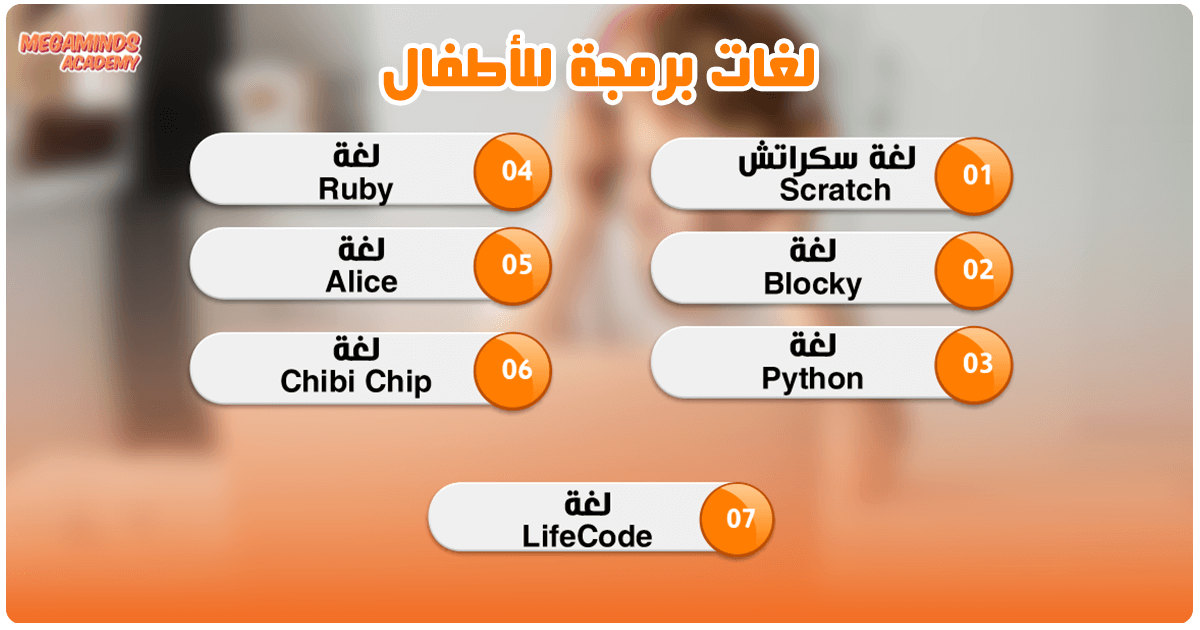
Children don't need to learn complicated code or dive into difficult concepts to understand programming. They can start with a simple, fun, and interactive programming language that opens the doors of creativity and critical thinking for them.
There are many of the easiest programming languages for kids that make learning to code a joy rather than a burden, and give them the chance to build their own projects, whether games or interactive stories. Among them:
1- Scratch
It is one of the easiest programming languages for kids, designed by the Massachusetts Institute of Technology (MIT) to make programming fun and easy, so that a child's coding adventure can begin without any complexity.
This language suits children from the age of 6 and up, and gives a child the chance to learn the core concepts of programming, such as:
- Loops
- Conditions (if statements)
- Variables
What sets Scratch apart is that it relies on a "drag and drop" system. All a child has to do is pick the code blocks from the menu and drag them into the right place, which makes learning to program feel like playing with building blocks.
Children can use this language online on the official website, and there are plenty of tutorials that children can follow step by step to learn, in a hands-on way, how to use one of the easiest programming languages for kids.
2- Blockly
Blockly is one of the easiest programming languages for kids, and it too relies on the drag-and-drop concept, which makes it one of the ideal choices for children who are just beginning to learn programming, as they can learn visually by assembling colorful, connected code blocks.
What sets Blockly apart is its simple interface, which encourages children to understand how to build code in a visual and enjoyable way, without worrying about writing or understanding complicated text-based code.
Children use Blockly to build simple applications, such as interactive games and animated stories, where they can add different elements like sound and images, and define the interactions between characters.
The main benefit of using Blockly is teaching children the fundamental principles of programming, such as repetition, conditions, and functions, in an interactive way. The language also provides an environment that fosters logical thinking and problem solving, which helps children develop their critical thinking skills indirectly.
So, if you are looking for one of the easiest programming languages for kids that combines fun and learning at the same time, Blockly is an ideal choice.
3- Python
Python falls under the list of the easiest programming languages for kids, offering an ideal blend of simplicity and flexibility, which makes it the perfect choice for beginners.
Python is known for its simple, clear syntax, as it comes very close to plain English, making it easy for children to understand code and run it quickly. This language is the best choice for more advanced stages after learning the basics using visual languages like Scratch and Blockly.
Among its most notable advantages:
- Easy to write and understand, with simple syntax that resembles plain English.
- Teaches children core programming concepts such as variables, loops, and conditions.
- Helps children build games and interactive programs.
- Offers a supportive community with many learning resources and plenty of help.
Children can begin learning Python through platforms like Codecademy and edX, which offer beginner courses for learning to program in Python. They can also download development environments like Thonny or IDLE, which provide a child-friendly, easy-to-use environment.
As their skills grow, they can build larger programming projects, such as simple games or even mobile phone apps.
Also read: More Than 10 Free Platforms for Kids to Learn Programming
4- Ruby
Ruby stands out for its flexibility and simplicity, which makes learning it a fun and easy experience. It was designed to be suitable for beginners who want to learn text-based coding in a practical, clear style, helping children develop their programming skills quickly.
Among its most notable advantages:
Flexibility and readability
Ruby is known for its simple, clear syntax that resembles natural language, making it easy for children to understand and use the code. It has no complicated rules or intricate technical details, which lets children focus on the core programming concepts.
A flexible approach to learning text-based coding
With Ruby, children learn text-based coding with flexibility. They can build small applications by writing simple logical code, which strengthens their ability to understand variables, loops, and conditions effectively.
Popularity and widespread use
Ruby is used mainly in web development through Ruby on Rails, a popular framework for building websites. By learning Ruby, a child opens up many future opportunities in the world of programming and web development.
Tutorials available
Ruby offers many online learning resources that make it easy for children to learn the basics of programming. Platforms like Learn Ruby and Codecademy provide interactive courses that make learning to program easier and more appealing for children.
Children can start learning Ruby through educational platforms that offer an interactive environment, such as Codecademy and RailsBridge.
After that, they can use development environments like RubyMine or Sublime Text to write code and try out their projects, and as they progress, they can build games or small websites, which helps them apply programming concepts in a fun way and motivates them to keep learning.
Also read: The 10 Best Coding Games for Kids to Build Thinking and Creativity Skills
5- Alice
A graphical programming language designed specifically to teach children programming in a fun and simplified way. Instead of writing code as text, as in traditional languages, Alice uses a visual environment that enables children to program interactive stories and 3D games by dragging and dropping code blocks.
Alice lets children create interactive scenes using 3D objects that can be moved and edited. A child can design the elements, then add the code that makes them move within a 3D environment.
One of Alice's most notable advantages is that it helps a child learn how to think logically and use programming to solve problems. For example, to trigger a particular movement in the game, the child has to determine the correct sequence of commands.
Children can start using Alice by downloading the program onto their computer. It requires no prior experience in programming, as the lessons begin with simple concepts that children can understand.
There are also many online tutorials and learning resources that provide step-by-step guidance to help children learn programming through Alice.
6- Chibi Chip
It is an innovative programming language designed specifically for young children, starting from ages 5 to 8. This language aims to teach children the basic concepts of programming by interacting with a cheerful, lovable character called "Chibi Chip".
Instead of focusing on complicated code, Chibi Chip provides very simple commands, which makes learning to program a fun and easy-to-understand experience.
Through Chibi Chip, children learn how to use loops to repeat commands, conditions to control the flow of the program based on certain decisions, and variables to store data and use it later.
All of this happens through an interactive environment that blends play and learning, so children enjoy themselves while picking up the skills that prepare them to enter the world of programming in the future.
This language is an excellent way for children to learn programming in a non-traditional way, as they can put what they've learned into practice by creating visual code that interacts with the Chibi Chip character in a fun environment.
One of Chibi Chip's most notable advantages is that it requires no prior knowledge of programming, as the lessons start by teaching children the foundations of programming in an engaging way that suits their young age. The language itself also features colorful graphics and cheerful characters that encourage children to keep learning programming and to enjoy the learning experience.
7- LifeCode (for the advanced level)
It is an advanced programming language designed to suit children who want to learn programming at a more sophisticated level. LifeCode was developed to teach children aged 10 and up the more complex programming concepts in a fun and interactive way.
The language uses a learning environment that includes interactive projects and educational games, where children can learn how to write complex code by building games and applications.
What sets LifeCode apart is that it gives children the chance to build real projects that require advanced programming skills, such as data management, Object-Oriented Programming, and the ability to execute complex functions in real time.
It also helps children understand how to organize code in a logical way, and how to interact with the programming environment more flexibly.
Through LifeCode, children can learn how to design interactive games and create multi-user applications, which strengthens their technical and creative skills.
Also read about Machine Learning for Kids
Tips for Mothers to Support Their Children in Learning Programming
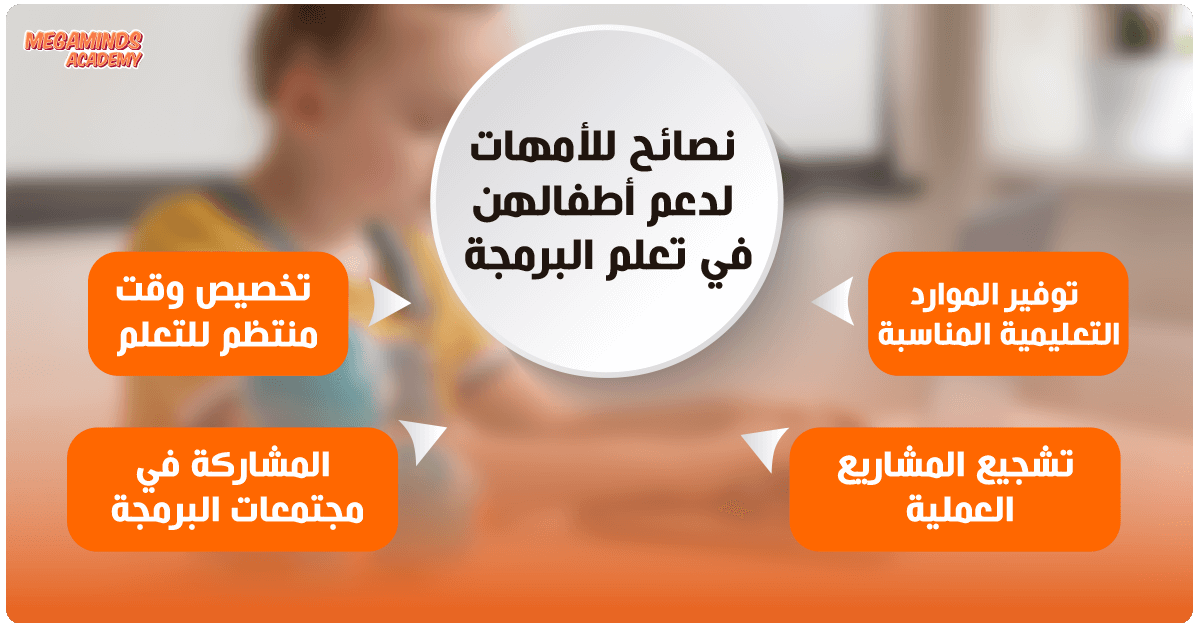
After getting to know the easiest programming languages for kids, it's the mother's turn to support her child and motivate them to keep learning. She should:
Provide the right learning resources
One of the most important ways to support children in learning programming is to provide learning resources that match their ages and levels.
Mothers can look for educational books, online courses, or interactive learning websites that help make understanding programming easier in an enjoyable way.
Encourage hands-on projects
By motivating children to apply what they've learned about programming in real projects, you can deepen their understanding of programming concepts. Children can start by building simple games or interactive applications that help them gain practical skills and critical thinking.
Take part in programming communities
Joining programming clubs or online forums is a great way to develop children's programming skills, as it lets children connect with their peers who are also learning to program, giving them the chance to benefit from others' experiences.
Set aside regular time for learning
To ensure a child progresses in learning programming, regular weekly time should be set aside for study and practice. A consistent schedule helps reinforce the child's commitment to learning programming and ensures this important skill isn't neglected.
Learning time can be organized by setting aside an hour or two per week to focus on programming, which ensures the child keeps building skills without feeling pressured.
Make Learning Programming Easy and Fun for Your Child with "Megaminds Academy"
At "Megaminds Academy", we help you give your child a strong start in the world of programming through the easiest and most enjoyable teaching methods. We rely on world-class platforms that make learning to code a special experience, free of complexity, and your child will learn the basics of programming in a flexible way, applying what they learn in hands-on projects that suit their age and level.
We understand that you are looking for the best for your child, which is why we provide a fun learning environment that motivates them to explore and create, helping them build logical thinking and problem-solving skills from an early age.
Finally, teaching programming to children has become a necessity in our digital world, as it opens the doors of creativity for them and gives them logical thinking and problem-solving skills.
Through the easiest programming languages for kids, your child can begin their learning journey in a fun and easy way, without feeling overwhelmed or bored.
And here at "Megaminds Academy", we help you achieve that through interactive educational programs built on the best platforms, such as Code.org, to guarantee your child a fun and effective learning experience.
Sign up with us now, and let your child discover the world of programming in the easiest and most enjoyable way.